
"Punk's not dead
It just deserves to die
When it becomes another stale cartoon
A close-minded, self-centered social club
Ideas don't matter, it's who you know
If the music's gotten boring
It's because of the people
Who want everyone to sound the same
Who drive bright people out
Of our so-called scene
'Til all that's left Is just a meaningless fad
Hardcore formulas are dogshit
Change and caring are what's real
Is this a state of mind
Or just another label
The joy and hope of an alternative
Have become its own cliche
A hairstyle's not a lifestyle
Imagine Sid Vicious at 35" - Dead Kennedys
I would have posted this as a comment, but I felt that Hanno should be forced to read it
- Mikey C
Sunday, November 23, 2008


Saturday, November 22, 2008
The Movement is Officially Dead...And For Sale!
Christie’s New York Pop Culture: Punk/Rock will feature a collection of memorabilia from the Ramones to The Clash and The Sex Pistols, including posters, records, clothing, autographed material and ephemera, as well as rare guitars owned by Bob Marley and Kurt Cobain, studio tapes with written orchestration notes by Jimi Hendrix, and the original artwork for the cover of Beastie Boys License to Ill album.

The sale will also feature such items as:
The Sex Pistols
A promotional poster for the 1977 Virgin Records' single God Save The Queen, designed by Jamie Reid. Opening bids: $2,000 - 3,000
For those of you who don't know:
Christie's will attempt to answer this age old question on November 24th, 2008: How much is a movement worth?
You can access the full press release here
You can access the Christie's site here
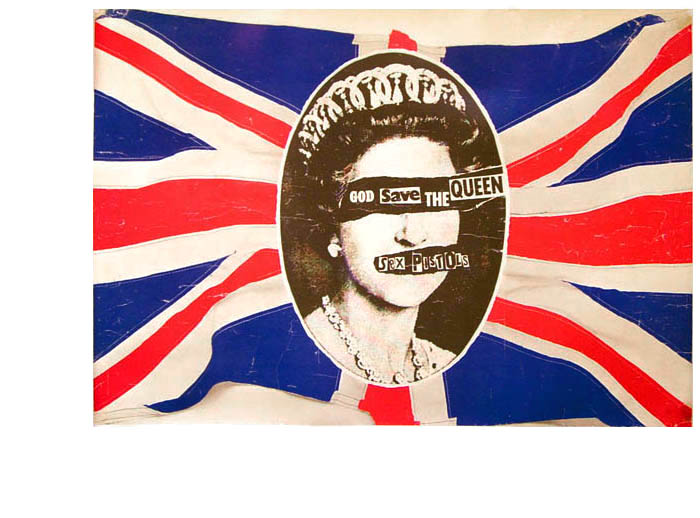
The sale will also feature such items as:
The Sex Pistols
A promotional poster for the 1977 Virgin Records' single God Save The Queen, designed by Jamie Reid. Opening bids: $2,000 - 3,000
For those of you who don't know:
Christie’s is the world's leading art business with global art sales in 2007 that totalled £3.1 billion/$6.3 billion. This marks the highest total in company and in art auction history. For the first half of 2008, art sales totalled £1.8 billion / $3.5 billion. Christie’s is a name and place that speaks of extraordinary art, unparalleled service and expertise, as well as international glamour. Founded in 1766 by James Christie, Christie's conducted the greatest auctions of the 18th, 19th and 20th centuries, and today remains a popular showcase for the unique and the beautiful. Christie’s offers over 600 sales annually in over 80 categories, including all areas of fine and decorative arts, jewellery, photographs, collectibles, wine, and more. Prices range from $200 to over $80 million. Christie’s has85 offices in 43 countries and 14 salerooms around the world including in London, New York, Los Angeles, Paris, Geneva, Milan, Amsterdam, Tel Aviv, Dubai, Hong Kong and Zurich. Most recently,Christie’s has led the market with expanded initiatives in emerging and new markets such as Russia,China, India and the United Arab Emirates, with successful sales and exhibitions in Beijing, Mumbai
Christie's will attempt to answer this age old question on November 24th, 2008: How much is a movement worth?
You can access the full press release here
You can access the Christie's site here
Wednesday, November 19, 2008
Upcoming Philosophy Conferences
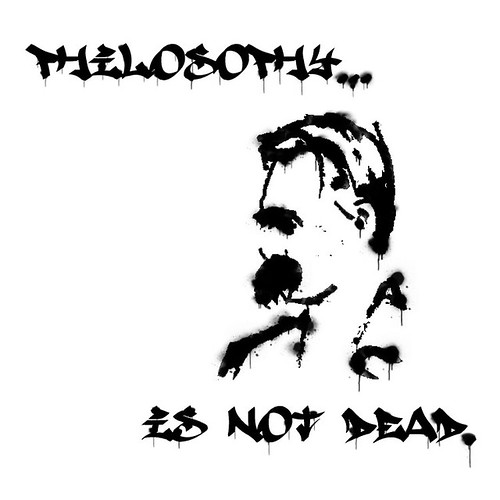
At the last philosophy club meeting, several students expressed interest in attending a professional conference. The following conferences all accept students from undergraduates. In addition to attending, some of you may want to dust off your best philosophy paper and submit it for presentation. Here are some upcoming conferences of interest for students:
- Members of the LSU Philosophy department are currently planning an international conference on Mind, Metaphysics, Language, and Epistemology, to be held annually during Mardi Gras. Check this website for updates. Last year, the graduate students held a philosophy conference at LSU on April 11-12, 2008. I believe they are hosting the second annual conference in 2009.
- The thirty-third annual MidSouth Philosophy Conference is scheduled for Friday afternoon and Saturday, April 17-18, at The University of Memphis. Papers in any area are welcome. There will be a $20 registration fee, payable at the conference. This includes an undergraduate conference as well. Dr. Bulhof will be presenting at this conference.
- The University of Texas at Austin: 2009 Graduate Philosophy Conference: Experience, Judgement, and Action. A conference and workshop in contemporary philosophy: April 17-19, 2009.
The Second Annual Southeast Philosophy Congress invites submissions from undergraduate and graduate students in any area of philosophy. The Congress, hosted by Clayton State University in Morrow, GA, runs February 13-14, 2009, with keynote speaker Jack Zupko from Emory University. Presented papers will be published in online and print proceedings.
Talks should run 20 minutes, and will be followed by a 10 minute question/answer period. Please email papers, accompanied by a brief abstract, to Dr. Todd Janke: ToddJanke@Clayton.edu. Submission deadline is December 15, 2008. The registration fee of $45.00 includes lunch both days and a print copy of the proceedings.
Monday, November 17, 2008
War *huh!* What is it good for?
by Hanno
So I am working on my presentation for the MSU philosophy club's next installment of Filmosophy, where we take a movie and discuss its philosophical implications. The film I choose, with boggled looks to whomever I tell, is "Starship Trooper," directed by Paul Verhoeven. Yes, the movie about killing bugs. Really big ugly bugs. Lots of them. Certainly, no one expects much from Verhoeven. (Upon hearing of my talk, my little sister declared "I thought that it was truth universally acknowledged that Paul Verhoeven has the depth of a metaphysical and proverbial puddle." But, my dear sister, as Locke knew, there are no universally acknowledged truths, and he pointed to children and idiots as counterexamples. Be that as it may, and it may be...)
I will write a bit more about my talk next week and the week after (talk is Dec. 5th, called Starship Troopers: The New Republic), but there are side issues in the film that I wanted to address. I did not know, until I did a little research, that the movie was based on a book written in 1959. The book is quite different from the movie, and one of the key differences is its approach to war. The book was written by
Heinlein, a former graduate of the Naval Academy, and officer in the US Navy until forced out by health reasons. He left the Navy in the mid '30s. The book is also a clear reaction to the anti-militancy of the Left in the 30's and beyond. Three features to which I will point: 1) Heinlein seems to belive in the character building of boot camp. This is an extensive part of the movie, as selfish person gets transformed into citizen, where "a citizen accepts personal responsibility for the safety of the body politic, of which he is a member, defending it, if need be, with his life." The citizen puts the safety of the whole above her own. Combat and boot campe are the vehicles for this transformation. 2) War is a solution to problems, argues Heinlein. "Naked force has settled more issues in history than any other factor. The contrary opinion 'violence never solves anything' is wishful thinking at its worst." The radicals of the '60's were criticized for much the same view. No social advance, they argued ever came without violence. 40 hour work week, abolision of slavery, woman's sufferage, etc., etc. and 3) War is inherent in human society. The war with the bugs has no real beginning, and it is a constant struggle in the book.
Here the movie is quite different. On Verhoeven's interpretation, the humans start the war by moving into bug territory with the purpose of expansion. The bugs respond to human aggression by unleashing meteors that slam into the earth, and by wiping out the colonies.
Plato argued in the Republic that a state can either be healthy, and keep its needs to necessities, or it can give into its desires for more, limitless desires which are symbolized in the Republic as the love of money. This requires, eventually, seizing of the land of neighbors to feed our insatiable appetites. Our neighbors will want to seize our land, too, "if they too have surrendered themselves to the endless acquisition of money and have overstepped the limit of their necessities."(Rep. 373d) This in turn requires the formation of an army, both to defend the society and to agressively take from others. This, Plato writes, is the origin of war. "It comes from those same desires that are most of all responsible for the bad things that happen to cities and the individuals in them."(Rep. 373e)
War is not an essential feature of man, but an essential feature of man that has given into the insatiable desires of the luxourious life. War is not a good thing, but the creation of the worst elements in human nature. Human expansion into bug territory is thus a classic example of how Plato sees the origins of war.
Reactions?
So I am working on my presentation for the MSU philosophy club's next installment of Filmosophy, where we take a movie and discuss its philosophical implications. The film I choose, with boggled looks to whomever I tell, is "Starship Trooper," directed by Paul Verhoeven. Yes, the movie about killing bugs. Really big ugly bugs. Lots of them. Certainly, no one expects much from Verhoeven. (Upon hearing of my talk, my little sister declared "I thought that it was truth universally acknowledged that Paul Verhoeven has the depth of a metaphysical and proverbial puddle." But, my dear sister, as Locke knew, there are no universally acknowledged truths, and he pointed to children and idiots as counterexamples. Be that as it may, and it may be...)
I will write a bit more about my talk next week and the week after (talk is Dec. 5th, called Starship Troopers: The New Republic), but there are side issues in the film that I wanted to address. I did not know, until I did a little research, that the movie was based on a book written in 1959. The book is quite different from the movie, and one of the key differences is its approach to war. The book was written by
Heinlein, a former graduate of the Naval Academy, and officer in the US Navy until forced out by health reasons. He left the Navy in the mid '30s. The book is also a clear reaction to the anti-militancy of the Left in the 30's and beyond. Three features to which I will point: 1) Heinlein seems to belive in the character building of boot camp. This is an extensive part of the movie, as selfish person gets transformed into citizen, where "a citizen accepts personal responsibility for the safety of the body politic, of which he is a member, defending it, if need be, with his life." The citizen puts the safety of the whole above her own. Combat and boot campe are the vehicles for this transformation. 2) War is a solution to problems, argues Heinlein. "Naked force has settled more issues in history than any other factor. The contrary opinion 'violence never solves anything' is wishful thinking at its worst." The radicals of the '60's were criticized for much the same view. No social advance, they argued ever came without violence. 40 hour work week, abolision of slavery, woman's sufferage, etc., etc. and 3) War is inherent in human society. The war with the bugs has no real beginning, and it is a constant struggle in the book.
Here the movie is quite different. On Verhoeven's interpretation, the humans start the war by moving into bug territory with the purpose of expansion. The bugs respond to human aggression by unleashing meteors that slam into the earth, and by wiping out the colonies.
Plato argued in the Republic that a state can either be healthy, and keep its needs to necessities, or it can give into its desires for more, limitless desires which are symbolized in the Republic as the love of money. This requires, eventually, seizing of the land of neighbors to feed our insatiable appetites. Our neighbors will want to seize our land, too, "if they too have surrendered themselves to the endless acquisition of money and have overstepped the limit of their necessities."(Rep. 373d) This in turn requires the formation of an army, both to defend the society and to agressively take from others. This, Plato writes, is the origin of war. "It comes from those same desires that are most of all responsible for the bad things that happen to cities and the individuals in them."(Rep. 373e)
War is not an essential feature of man, but an essential feature of man that has given into the insatiable desires of the luxourious life. War is not a good thing, but the creation of the worst elements in human nature. Human expansion into bug territory is thus a classic example of how Plato sees the origins of war.
Reactions?
Friday, November 14, 2008
The Problem Of Consciousness

 The Edge Foundation has posted a video interview with Alva Noë, Professor of Philosophy at UC-Berkeley, on the problem of consciousness. From the Web site:
The problem of consciousness is understanding how this world is there for us. It shows up in our senses. It shows up in our thoughts. Our feelings and interests and concerns are directed to and embrace this world around us. We think, we feel, the world shows up for us. To me that's the problem of consciousness. That is a real problem that needs to be studied, and it's a special problem.A useful analogy is life. What is life? We can point to all sorts of chemical processes, metabolic processes, reproductive processes that are present where there is life. But we ask, where is the life? You don't say life is a thing inside the organism. The life is this process that the organism is participating in, a process that involves an environmental niche and dynamic selectivity. If you want to find the life, look to the dynamic of the animal's engagement with its world. The life is there. The life is not inside the animal. The life is the way the animal is in the world.
What is at issue is whether we can apply an objective causal model to explain our subjective conscious states to meaningfully explain the mystery of consciousness.
Thursday, November 13, 2008
Public Intellectual 2.0

Daniel Drezner's article on public intellectuals and blogs was recently published in The Chronicle of Higher Education. In this article he bemoans the idea that public intellectuals are no longer in existence. More often than not, the internet is pointed at with an icy finger as the culprit in the demise of the public intellectual. Andrew Keen's book, The Cult of the Amateur: How Today's Internet is Killing Our Culture, is a good example. The general thesis is that good, intelligent commentary and discourse is lost amongst the immature, uneducated masses composing blogs, webpages, and facebook pages. However, the underlying assumption is that traditional media and publishing outlets (books and magazines) are somehow superior and conceal no hidden agenda or bias. Mother Jones is still published in print and the bias is quite obvious.
The argument becomes misguided when the focus becomes the disease of the internet. The real argument should focus on the definition of a public intellectual. As Dezner points out, a public intellectual is someone who writes serious-but-accessible-essays on ideas, culture, and society. I believe most critics forget the public part of public intellectual. When social and intellectual curmudgeons bemoan the lack of public intellectuals they really mean private intellectuals with wider distribution: someone affiliated with a university, publishing in an academic press or journal. However, these works are often written for fellow scholars and the discourse is narrowly focused and inaccessible to the uninitiated. Hence, the public does not read these works (even when the ideas are great and in need of wider dissemination).
The turf war is over intellectual territory. Intellectuals writing for the masses with jargon-free prose but unaffiliated with universities find the internet (blogs in particular) to be the easiest and best form to disseminate their ideas to the masses. Moreover, you don't need a pricey subscription to access the information. Private intellectuals (those affiliated with universities) largely disdain amateurs writing on their topics and won't play on their turf (the internet). Why would they? The history of scholastic publishing is well documented in the university and they hold the monopoly. However, Drezner points out that even academics in the ivory tower have something to gain from blogging:
For academics aspiring to be public intellectuals, blogs allow networks to develop that cross the disciplinary and hierarchical strictures of academe. Provided one can write jargon-free prose, a blog can attract readers from all walks of life — including, most importantly, people beyond the ivory tower. (The distribution of traffic and links in the blogosphere is highly skewed, and academics and magazine writers make up a fair number of the most popular bloggers.) Indeed, because of the informal and accessible nature of the blog format, citizens will tend to view academic bloggers that they encounter online as more accessible than would be the case in a face-to-face interaction, increasing the likelihood of a fruitful exchange of views about culture, criticism, and politics with individuals whom academics might not otherwise meet. Furthermore, as a longtime blogger, I can attest that such interactions permit one to play with ideas in a way that is ill suited for more-academic publishing venues. A blog functions like an intellectual fishing net, catching and preserving the embryonic ideas that merit further time and effort.So what do you think? Do you think the internet (blogs in particular) continues to erode the idea of a public intellectual or does it define him/her?
- JF
Monday, November 10, 2008
Possible Worlds III - Actualism
by Hanno
Lewis held that possible worlds exist exactly like this one. His view entails that there are uncountably many things that exist in "uncountable infinities of donkeys, protons and puddles, of planets very like earth... small wonder if you are reluctant to believe it." Actualist possible worlds tries to use the power of modal logic using actual objects to ground talk of possible worlds. Actualists reject Lewis's view precisely because it is unbelievable.
There are at least three versions of actualist possible worlds semantics. According to Stalnaker, possible worlds are uninstantiated properties. Like the property of being a unicorn, the property exists even if there are no examples of unicorns. In logic-speak, an instance of the property is its instantiation. So uninstantiated properties are properties that nothing has. But for many philosophers, like Plato, the property can exist even if there is no instance.
Alvin Plantinga holds that possible worlds are complete states of affairs. These exist as abstract entities and have properties. The state of affairs "Quine's being a philosopher" has the property of obtaining, while the state of affairs "Quine's being a politician" has the property of not obtaining. Some states of affairs have the property of being possible, and others do not (though Plantinga does not state whether he thinks the imposible states of affairs non-the-less exist). Plantinga has a technical way of defining complete, but basically, for any state of affairs S, a complete state of affairs either includes either S or not S.
According to Robert Adams, possible worlds are not states of affairs, nor abstract objects, but complete, consistent sets of propositions. Propositions are actual intensional abstract entities, and these propositions have the property of being either true or false. A proposition like "Aristotle is tall" contains both the individual Aristotle and the property of being tall. Consistency in complete sets of propositions is inherently modal: It is consistent if it is possible to be true together.
Other philosophers will use a logical notion of consistency, ie, it is consistent iff there is a model which satisfies the set of sentences which mean the propositions. In such a case, anything that is logically consistent is possible, and vise versa. Adams was trying to avoid that conclusion. But the more empiricist philosophers (Hume, Quine, Carnap, early Wittgenstein) all accept that kind of view.
Finally, there are the fictionalists: possible worlds are fictional entities. Just as there are truths about Superman, fiction can ground truth. Just as the fiction of the ideal gas law gives us important truths, so fictional truths can be important. Talk of possibility is grounded on these kinds of important fictions. David Armstrong (not the one at McNeese) holds this kind of view, and cites Wittgenstein as his inspiration.
So possible worlds are: complete consistent states of affairs, complete consistent propositions, complete consistent sets of sentences or made up entities, each version grounding the truth of our modal claims and justifying modal logic.
Lewis held that possible worlds exist exactly like this one. His view entails that there are uncountably many things that exist in "uncountable infinities of donkeys, protons and puddles, of planets very like earth... small wonder if you are reluctant to believe it." Actualist possible worlds tries to use the power of modal logic using actual objects to ground talk of possible worlds. Actualists reject Lewis's view precisely because it is unbelievable.
There are at least three versions of actualist possible worlds semantics. According to Stalnaker, possible worlds are uninstantiated properties. Like the property of being a unicorn, the property exists even if there are no examples of unicorns. In logic-speak, an instance of the property is its instantiation. So uninstantiated properties are properties that nothing has. But for many philosophers, like Plato, the property can exist even if there is no instance.
Alvin Plantinga holds that possible worlds are complete states of affairs. These exist as abstract entities and have properties. The state of affairs "Quine's being a philosopher" has the property of obtaining, while the state of affairs "Quine's being a politician" has the property of not obtaining. Some states of affairs have the property of being possible, and others do not (though Plantinga does not state whether he thinks the imposible states of affairs non-the-less exist). Plantinga has a technical way of defining complete, but basically, for any state of affairs S, a complete state of affairs either includes either S or not S.
According to Robert Adams, possible worlds are not states of affairs, nor abstract objects, but complete, consistent sets of propositions. Propositions are actual intensional abstract entities, and these propositions have the property of being either true or false. A proposition like "Aristotle is tall" contains both the individual Aristotle and the property of being tall. Consistency in complete sets of propositions is inherently modal: It is consistent if it is possible to be true together.
Other philosophers will use a logical notion of consistency, ie, it is consistent iff there is a model which satisfies the set of sentences which mean the propositions. In such a case, anything that is logically consistent is possible, and vise versa. Adams was trying to avoid that conclusion. But the more empiricist philosophers (Hume, Quine, Carnap, early Wittgenstein) all accept that kind of view.
Finally, there are the fictionalists: possible worlds are fictional entities. Just as there are truths about Superman, fiction can ground truth. Just as the fiction of the ideal gas law gives us important truths, so fictional truths can be important. Talk of possibility is grounded on these kinds of important fictions. David Armstrong (not the one at McNeese) holds this kind of view, and cites Wittgenstein as his inspiration.
So possible worlds are: complete consistent states of affairs, complete consistent propositions, complete consistent sets of sentences or made up entities, each version grounding the truth of our modal claims and justifying modal logic.
Wednesday, November 5, 2008
Living History
Today, November 5th, 2008, I decided to cancel my class. I sent this out to my students explaining my decision:
"Tonight's results are historic, and this isn't a platitude. You have witnessed a profound moment in American history - this is a moment that will be more than a historical footnote. Whether you agree with the election's outcome or not, I encourage you to consider the shift that has occurred in society in the past five decades.
Fifty years ago, segregation was enforced and part of mainstream culture. Blacks and whites had separate bathrooms, separate water fountains, separate lives and citizenry. While slavery had been abolished, we were still living the legacy of reconstruction and Jim Crow laws, in which race relations were at a nadir. Lynchings and persecution of minorities were accepted practice in many communities that viewed race as a legitimate reason to denigrate others and relegate them to second class citizenship.
Fifty years ago mixed-race marriages were unacceptable, and "miscegenation" was the cause of scandal in communities. Fifty years ago people were killed for encouraging minorities to vote. Fifty years ago towns would encourage minorities to leave before sundown, so that they wouldn't be killed.
Fifty years later we have elected Barack Obama to the position of President of the United States. Fifty years later we have shown that leadership is not to be identified with race, but by national mandate and governing ideology. Fifty years later we have seen the most significant step in race relations occur in the history of the United States.
This is living history. All too often we identify history with events far in the past, associating the idea with a list of names and dates that we memorize for a test and quickly forget. We ignore the fact that history begins at the end of this sentence. History is not dead - it informs the present and shapes the future. History is one of the most important things we have. This moment will live in history, and I want you to remember it.
Learn from the next four years to see if it is possible for us to overcome the acrimony of the presidential race. Learn from the next four years if it is possible for us to overcome the profound ideological divide that had us at each others' throats. Learn if we can find a common identity as Americans, rather than red states or blue states. This is history you can tell your children, as you experienced it first hand. This is history the likes of which we as a nation have never seen before, and will define our character for the foreseeable future.
I am cancelling class tomorrow - abortion too easily serves the politics of division. I will be on campus and will hold normal office hours, but I will not teach on this issue. We will resume lecture on Monday. Use tomorrow for what purposes seem best to you, but remember that these moments are few, and far between. Use them wisely."
This is my generation's moon landing - an unparalleled event in the history the United States. This represents the best the United States has to offer. This is the kind of event that restores faith in the voting public and is a resounding blow against the politics of division. There are times when I am ashamed for what has been done in the "national interest" and our legal obfuscations attempting to rationalize the most horrific of practices. There are genuinely times when I question whether we, as a nation, have forgotten the political ideals that informed our sense of national identity.
Then there are days like today, when I remember the good that we as a nation can do. From his first words, we have someone seeking optimism and ability. We have someone who recognizes that 50,000,000 isn't a mandate when there are 50,000,000 who voted against him, and recognizes that his political obligation is to all Americans, and not just his base. This makes me proud to be an American, through and through, and the recognition that leadership is not a partisan issue, and that times of need requires a willingness from everyone to assist.
I donated blood with hundreds of others following 9/11. I was part of a line that stretched around the block of people willing to give of themselves when the nation as a whole was attacked. I watched this sense of national identity, of collective existence, wither under puerile criticism and attack over the following seven years. I watched us return to our partisan feelings and sense of schadenfreude when some self-appointed moral paragon revealed himself to be just as human and fallible as the rest of us.
Tonight was the first time in a long time that I felt the same possibility of genuine American identity and mutual support. I hope the next four years is not more of the same. I hope that we use this time to remember that we are a pluralistic nation, not "real Americans" and "fake Americans". I hope we can remember that sense of common identity we realized during 9/11 and its aftermath. I think tonight we've all earned the right to hope.
-MAB
"Tonight's results are historic, and this isn't a platitude. You have witnessed a profound moment in American history - this is a moment that will be more than a historical footnote. Whether you agree with the election's outcome or not, I encourage you to consider the shift that has occurred in society in the past five decades.
Fifty years ago, segregation was enforced and part of mainstream culture. Blacks and whites had separate bathrooms, separate water fountains, separate lives and citizenry. While slavery had been abolished, we were still living the legacy of reconstruction and Jim Crow laws, in which race relations were at a nadir. Lynchings and persecution of minorities were accepted practice in many communities that viewed race as a legitimate reason to denigrate others and relegate them to second class citizenship.
Fifty years ago mixed-race marriages were unacceptable, and "miscegenation" was the cause of scandal in communities. Fifty years ago people were killed for encouraging minorities to vote. Fifty years ago towns would encourage minorities to leave before sundown, so that they wouldn't be killed.
Fifty years later we have elected Barack Obama to the position of President of the United States. Fifty years later we have shown that leadership is not to be identified with race, but by national mandate and governing ideology. Fifty years later we have seen the most significant step in race relations occur in the history of the United States.
This is living history. All too often we identify history with events far in the past, associating the idea with a list of names and dates that we memorize for a test and quickly forget. We ignore the fact that history begins at the end of this sentence. History is not dead - it informs the present and shapes the future. History is one of the most important things we have. This moment will live in history, and I want you to remember it.
Learn from the next four years to see if it is possible for us to overcome the acrimony of the presidential race. Learn from the next four years if it is possible for us to overcome the profound ideological divide that had us at each others' throats. Learn if we can find a common identity as Americans, rather than red states or blue states. This is history you can tell your children, as you experienced it first hand. This is history the likes of which we as a nation have never seen before, and will define our character for the foreseeable future.
I am cancelling class tomorrow - abortion too easily serves the politics of division. I will be on campus and will hold normal office hours, but I will not teach on this issue. We will resume lecture on Monday. Use tomorrow for what purposes seem best to you, but remember that these moments are few, and far between. Use them wisely."
This is my generation's moon landing - an unparalleled event in the history the United States. This represents the best the United States has to offer. This is the kind of event that restores faith in the voting public and is a resounding blow against the politics of division. There are times when I am ashamed for what has been done in the "national interest" and our legal obfuscations attempting to rationalize the most horrific of practices. There are genuinely times when I question whether we, as a nation, have forgotten the political ideals that informed our sense of national identity.
Then there are days like today, when I remember the good that we as a nation can do. From his first words, we have someone seeking optimism and ability. We have someone who recognizes that 50,000,000 isn't a mandate when there are 50,000,000 who voted against him, and recognizes that his political obligation is to all Americans, and not just his base. This makes me proud to be an American, through and through, and the recognition that leadership is not a partisan issue, and that times of need requires a willingness from everyone to assist.
I donated blood with hundreds of others following 9/11. I was part of a line that stretched around the block of people willing to give of themselves when the nation as a whole was attacked. I watched this sense of national identity, of collective existence, wither under puerile criticism and attack over the following seven years. I watched us return to our partisan feelings and sense of schadenfreude when some self-appointed moral paragon revealed himself to be just as human and fallible as the rest of us.
Tonight was the first time in a long time that I felt the same possibility of genuine American identity and mutual support. I hope the next four years is not more of the same. I hope that we use this time to remember that we are a pluralistic nation, not "real Americans" and "fake Americans". I hope we can remember that sense of common identity we realized during 9/11 and its aftermath. I think tonight we've all earned the right to hope.
-MAB
Tuesday, November 4, 2008
V for Voting
By Hanno
Yesterday in the Philosophy club, several people voiced the opinion that early polls were anti-democratic. The argument goes something like this:
If you believe that the candidate you are going to vote for will lose, you are less likely to go vote for your preferred candidate. Polls let people know that their candidate is likely to lose. Therefore, polls make it less likely for you to go vote for your preferred candidate.
This was separated into two separate arguments, first simply polls, and second calling the election (even when right) early, so that people in CA find their votes irrelevant, since the issue is already decided.
If this is right, then in suppressing the vote, polls function anti-democratically.
It must be granted that turnout is lower when you know your candidate will lose. How much lower is very debatable, but excitement about voting leads to higher turnout, and close elections and knowing your going to win lead to excitement, and hence higher turnout. That is why campaigns try to make people excited about voting, flags waving, bands playing, balloons flying, etc.. So let us grant the argument.
The error is in the beginning. People are told they should vote "to make a difference" "so their voice will be heard." This is simply an anti-democratic view. The only time your really make a difference is when your vote is the deciding vote. The will to make a difference is therefore an anti-democratic will, the will to be the one making the decision. The will to be heard is similar, but also misses the basic point in a modern democracy: your voice will never be heard as an individual. You are 1 of 300,000,000 in the country. Your voice as an individual is the squeak of a mouse at a Rolling Stones concert. If you vote to make your voice heard, do not vote, it will never happen. It is the view that your vote must effect something, that your vote must make difference which is the anti-democratic spirit, and suppresses the vote more than anything else. With that view, your vote really does not matter, so why vote?
Now if your voice is part of a choir, a large choir, and the choir is only large when each individual sings her part, then your voice is heard, but not as an individual voice. We hear the choir, not the individual. That is the role of a vote in a modern democracy. And hence polls, or previous outcome, or it already having been decided is irrelevant. Whether the choir you join is the winner or the opposition, you are being heard. And if you have that in mind, the arguments above are beside the point. You vote win or lose, and as you vote, you take your place among the 300,000,000. When you vote, you become a citizen, a part of the body of the United States of America. Isn't that good enough? No, isn't that better than anything else? If you are not content to be one of 300,000,000, then you are not content to be a citizen of this country. It is that simple. And then what would you be content with? Your vote making the difference, your vote deciding, you being the decider... you being the dictator, which will never happen.
So the choice is yours. Do not choose to vote because your candidate will win or lose. Either choose to vote and be an active citizen of this country as it is, or choose not to vote and be a bystander with empty dreams of unachievable anti-democratic power.
Yesterday in the Philosophy club, several people voiced the opinion that early polls were anti-democratic. The argument goes something like this:
If you believe that the candidate you are going to vote for will lose, you are less likely to go vote for your preferred candidate. Polls let people know that their candidate is likely to lose. Therefore, polls make it less likely for you to go vote for your preferred candidate.
This was separated into two separate arguments, first simply polls, and second calling the election (even when right) early, so that people in CA find their votes irrelevant, since the issue is already decided.
If this is right, then in suppressing the vote, polls function anti-democratically.
It must be granted that turnout is lower when you know your candidate will lose. How much lower is very debatable, but excitement about voting leads to higher turnout, and close elections and knowing your going to win lead to excitement, and hence higher turnout. That is why campaigns try to make people excited about voting, flags waving, bands playing, balloons flying, etc.. So let us grant the argument.
The error is in the beginning. People are told they should vote "to make a difference" "so their voice will be heard." This is simply an anti-democratic view. The only time your really make a difference is when your vote is the deciding vote. The will to make a difference is therefore an anti-democratic will, the will to be the one making the decision. The will to be heard is similar, but also misses the basic point in a modern democracy: your voice will never be heard as an individual. You are 1 of 300,000,000 in the country. Your voice as an individual is the squeak of a mouse at a Rolling Stones concert. If you vote to make your voice heard, do not vote, it will never happen. It is the view that your vote must effect something, that your vote must make difference which is the anti-democratic spirit, and suppresses the vote more than anything else. With that view, your vote really does not matter, so why vote?
Now if your voice is part of a choir, a large choir, and the choir is only large when each individual sings her part, then your voice is heard, but not as an individual voice. We hear the choir, not the individual. That is the role of a vote in a modern democracy. And hence polls, or previous outcome, or it already having been decided is irrelevant. Whether the choir you join is the winner or the opposition, you are being heard. And if you have that in mind, the arguments above are beside the point. You vote win or lose, and as you vote, you take your place among the 300,000,000. When you vote, you become a citizen, a part of the body of the United States of America. Isn't that good enough? No, isn't that better than anything else? If you are not content to be one of 300,000,000, then you are not content to be a citizen of this country. It is that simple. And then what would you be content with? Your vote making the difference, your vote deciding, you being the decider... you being the dictator, which will never happen.
So the choice is yours. Do not choose to vote because your candidate will win or lose. Either choose to vote and be an active citizen of this country as it is, or choose not to vote and be a bystander with empty dreams of unachievable anti-democratic power.
Monday, November 3, 2008
Ethical Issues in International Business
 Through the Faculty Colloquia series, one faculty member from each of the university's six colleges presents a topic in a specific area of expertise. The presentations are held from 2-4 p.m. on Thursdays throughout both semesters in the Stream Alumni Center and are open free to the public. This informative program is sponsored by the McNeese Alumni Association and the McNeese Write to Excellence Center.
On November 20th, Dr. Cam Caldwell, the director of the Master of Business Administration program at McNeese will give a presentation on the ethical issues in international business.
You can access the rest of the Faculty Collquia series here
Nothing
by Hanno
Exhausted from a trip, so I got nothing today. Will try to have something tomorrow.
Why is it that everyone at funerals and in churches all refer to the people who have died as if everyone knows they are in Heaven, enjoying all of its glories?
Exhausted from a trip, so I got nothing today. Will try to have something tomorrow.
Why is it that everyone at funerals and in churches all refer to the people who have died as if everyone knows they are in Heaven, enjoying all of its glories?
Monday, October 27, 2008
V for Violence
by Hanno
I was disturbed by several features of "V for Vendetta." I found the movie to glorify not just violence, but torture. And then it made revolution to be a non-violent wonderful thing (you can't have a Hollywood movie without a happy ending, can you?). But one of the main arguments against revolution is that they are indeed bloody, uncertain, violent and ugly. The romaticization of revolution has a huge effect: it allows for easy justifications. Hence we can look at a functioning society with less freedom we would like (hey, that sounds like ours) and raise start dropping the "R" word, as if its an easy solution to whatever problem. But it isnt. Revolutions are dirty, messy affairs where lots and lots of innocent people get killed, and lots of guilty ones, too. Hobbes knew this well, which is why he was against the whole idea. No, if a movie is to tackle the problem of fascism and revolution, lets have a real look at it, not the Hollywood version. This of course is compounded by celbrating the violence of V himself. And why? Would the violence have been justified if V had not been tortured? If the state had not created the crisis of the bioterrorist attacks? If we just had the all powerful fascist state, but people got there without coersion, would that justify V's violence? (ah, the first interesting question!)
But that was not what I wanted to talk about. Instead, it was the torture of Evey. According to the film, her torture makes her free. Listen to that as I repeat it: through torture, she becomes free. And she becomes free because she doesn't fear death anymore. She is unafraid. OK, let me make this clear: Torture does NOT make people unafraid. It breaks them, and makes them always afraid. Torture does not make people free. It robs them of their humanity. It may make you realize there are worse things than dieing, but that it not necessarily a good thing, and leads to suicide. People at Auschwitz were not free because they realized they would rather throw themselves onto the electric fence than live another day. In short, violence is not a way to overcome existential angst.
I was disturbed by several features of "V for Vendetta." I found the movie to glorify not just violence, but torture. And then it made revolution to be a non-violent wonderful thing (you can't have a Hollywood movie without a happy ending, can you?). But one of the main arguments against revolution is that they are indeed bloody, uncertain, violent and ugly. The romaticization of revolution has a huge effect: it allows for easy justifications. Hence we can look at a functioning society with less freedom we would like (hey, that sounds like ours) and raise start dropping the "R" word, as if its an easy solution to whatever problem. But it isnt. Revolutions are dirty, messy affairs where lots and lots of innocent people get killed, and lots of guilty ones, too. Hobbes knew this well, which is why he was against the whole idea. No, if a movie is to tackle the problem of fascism and revolution, lets have a real look at it, not the Hollywood version. This of course is compounded by celbrating the violence of V himself. And why? Would the violence have been justified if V had not been tortured? If the state had not created the crisis of the bioterrorist attacks? If we just had the all powerful fascist state, but people got there without coersion, would that justify V's violence? (ah, the first interesting question!)
But that was not what I wanted to talk about. Instead, it was the torture of Evey. According to the film, her torture makes her free. Listen to that as I repeat it: through torture, she becomes free. And she becomes free because she doesn't fear death anymore. She is unafraid. OK, let me make this clear: Torture does NOT make people unafraid. It breaks them, and makes them always afraid. Torture does not make people free. It robs them of their humanity. It may make you realize there are worse things than dieing, but that it not necessarily a good thing, and leads to suicide. People at Auschwitz were not free because they realized they would rather throw themselves onto the electric fence than live another day. In short, violence is not a way to overcome existential angst.
Friday, October 24, 2008
Possible Worlds II
We were talking about possible worlds being relative to other possible worlds, not relevant, and this is a technical term.
First, for most philosophers, all possible worlds are relative to all possible worlds. This has a consequence that it is governed by a formal logical system called S-5. If not all worlds are possible to all possible worlds, then weaker systems of logic govern our inferences. This is precisely what Kripke showed in his published work in the 1950's, when he was 18(!).
It follows in S-5 that anything which is possibly necessary is actually necessary. this has been used to prove God's existence in a version of the Ontological argument. God, if he exists, has the property of being a necessary being. It is possible that there is a God. Therefore, it is possible that a necessary being exists. By S-5, God is actually necessary, and and since anything which is necessary is true, God exists in this world, too.
Other philosophers deny that all possible worlds are possible relative to all possible worlds. Aristotle might not have existed. So there is a world at which there is no Aristotle. At that world, is it possible that Aristotle's son existed? What does it mean to say that some non-existent thing might have existed? In response to these kinds of questions, they deny the universal connection between possible worlds. Worlds in which Aristotle exists are not possible from worlds in which Aristotle does not exist, though the reverse does not hold. If that is right, the logic of modality is not S-5, but something weaker (S-4, for those who are counting) and it no longer follows that just because something is possible that it is necessarily possible, nor does it follow that something that is possibly necessary is actually necessary.
I am looking at my car. It is possible for it to start. But is it necessarily possible for it to start? On one way of looking at things, no, because it is possible for the engine block to be totally ruined. Spelling that out in possible worlds means some possible worlds are not possible from all possible worlds. It is possible that Aristotle exists. But is it necessarily possible? What if human beings never develop? What if the world blew up before humans ever appear on the world stage? Then there would still be a possible world in which Aristotle exists ("Aristotle might have existed" is true), but that world would not be relatively possible from worlds where the world blows up before humans arrive on the scene. Hence we can say Aristotle could not exist if the world blew up before humans arrive on the scene, even though he might exist in other circumstances.
Hope that helps.
I was going to post more on the metaphysics of modality, but ce side tracked me. Blame him. Will try to do that Monday.
First, for most philosophers, all possible worlds are relative to all possible worlds. This has a consequence that it is governed by a formal logical system called S-5. If not all worlds are possible to all possible worlds, then weaker systems of logic govern our inferences. This is precisely what Kripke showed in his published work in the 1950's, when he was 18(!).
It follows in S-5 that anything which is possibly necessary is actually necessary. this has been used to prove God's existence in a version of the Ontological argument. God, if he exists, has the property of being a necessary being. It is possible that there is a God. Therefore, it is possible that a necessary being exists. By S-5, God is actually necessary, and and since anything which is necessary is true, God exists in this world, too.
Other philosophers deny that all possible worlds are possible relative to all possible worlds. Aristotle might not have existed. So there is a world at which there is no Aristotle. At that world, is it possible that Aristotle's son existed? What does it mean to say that some non-existent thing might have existed? In response to these kinds of questions, they deny the universal connection between possible worlds. Worlds in which Aristotle exists are not possible from worlds in which Aristotle does not exist, though the reverse does not hold. If that is right, the logic of modality is not S-5, but something weaker (S-4, for those who are counting) and it no longer follows that just because something is possible that it is necessarily possible, nor does it follow that something that is possibly necessary is actually necessary.
I am looking at my car. It is possible for it to start. But is it necessarily possible for it to start? On one way of looking at things, no, because it is possible for the engine block to be totally ruined. Spelling that out in possible worlds means some possible worlds are not possible from all possible worlds. It is possible that Aristotle exists. But is it necessarily possible? What if human beings never develop? What if the world blew up before humans ever appear on the world stage? Then there would still be a possible world in which Aristotle exists ("Aristotle might have existed" is true), but that world would not be relatively possible from worlds where the world blows up before humans arrive on the scene. Hence we can say Aristotle could not exist if the world blew up before humans arrive on the scene, even though he might exist in other circumstances.
Hope that helps.
I was going to post more on the metaphysics of modality, but ce side tracked me. Blame him. Will try to do that Monday.
Thursday, October 23, 2008
Tuesday, October 21, 2008
Political Philosophy and Human Nature in V for Vendetta
People should not fear their governments. Governments should fear their people.
"Political Philosophy and Human Nature in V for Vendetta"
A presentation by Matthew A. Butkus, PhD
Friday, October 24, 2008
2:00 - 5:00 PM
Hardtner 128
Presented by the McNeese State University Philosophy Club
"Political Philosophy and Human Nature in V for Vendetta"
A presentation by Matthew A. Butkus, PhD
Friday, October 24, 2008
2:00 - 5:00 PM
Hardtner 128
Presented by the McNeese State University Philosophy Club
Monday, October 20, 2008
Possible Worlds
by Hanno
On the way out of last weeks meeting, Robert asked me about possible worlds. Todd, Lord Matt and I were using the notion of a possible world in the previous weeks discussion, but we did not say much about them. So here goes:
A possible world is a complete way the world might have been. Suppose you could have been a rock star. Then there is a possible world at which you are in fact a rock star. That part is easy, and gives us a way to think about what might have been. But what are possible worlds?
The first philosopher to use possible worlds was Leibniz, long ago. He used them in part to answer the problem of evil: This is "the best of all possible worlds" and hence a good God would naturally chose this one to being into existence. For Leibniz, possible worlds were ideas in the mind of God. Imagine Him going through each of the ways the world might have been. When he finally reaches the best of all of them, he chooses to make that one real. Philosophers call that "actualizing" or "instantiating" that world. So this is the only real world, but the others exist as ideas in the mind of God. When you say "I could have been a rock star" you are saying that there is an idea in the mind of God, and in that idea, you are a rock star. Unfortunately, that world was not the best of all possible worlds, and hence you are actually stuck with only dreams.
Possible worlds lay dormant as a philosophical tool until revived by Saul Kripke in the 1950's and 60's. In order to deal with a difficult problem in Modal Logic (defining validity, and hence providing a semantics, for those curious), he reintroduced the notion of a possible world. Pressed later on their metaphysical stauts, Kripke said that a possible world simply was a counterfactual situation. A counterfactual is a conditional (if-then claim) where the antecedent is false. Example: If Germany had won the war, blah blah blah. That stipulates a possible world where Germany did win the war. On his view, these do not exist as ideas in the mind of God, or any where else. However, if possible worlds do not exist, in what way do they make modal claims true?
Enter David Lewis. Lewis (and I'm not making this up) was reading a work of science fiction in which someone creates a new invention which allows people to travel to other possible worlds. Inspired by this, Lewis defends what he calls "Modal Realism," the view that other possible worlds exist exactly like this one, just in a different space-time. Real people, real situations. What happens in those other worlds makes our claim about what might have been true. Our world is the actual world for us, but our world is a possible world for them, and their world is their actual world. For anything that you think might have been, there is a world, which exists just like this one, where that actually happened.
Actualism is the view that the only thing that exists is the actual world, and actualists reject Lewis's views. More next week, if there is any interest.
On the way out of last weeks meeting, Robert asked me about possible worlds. Todd, Lord Matt and I were using the notion of a possible world in the previous weeks discussion, but we did not say much about them. So here goes:
A possible world is a complete way the world might have been. Suppose you could have been a rock star. Then there is a possible world at which you are in fact a rock star. That part is easy, and gives us a way to think about what might have been. But what are possible worlds?
The first philosopher to use possible worlds was Leibniz, long ago. He used them in part to answer the problem of evil: This is "the best of all possible worlds" and hence a good God would naturally chose this one to being into existence. For Leibniz, possible worlds were ideas in the mind of God. Imagine Him going through each of the ways the world might have been. When he finally reaches the best of all of them, he chooses to make that one real. Philosophers call that "actualizing" or "instantiating" that world. So this is the only real world, but the others exist as ideas in the mind of God. When you say "I could have been a rock star" you are saying that there is an idea in the mind of God, and in that idea, you are a rock star. Unfortunately, that world was not the best of all possible worlds, and hence you are actually stuck with only dreams.
Possible worlds lay dormant as a philosophical tool until revived by Saul Kripke in the 1950's and 60's. In order to deal with a difficult problem in Modal Logic (defining validity, and hence providing a semantics, for those curious), he reintroduced the notion of a possible world. Pressed later on their metaphysical stauts, Kripke said that a possible world simply was a counterfactual situation. A counterfactual is a conditional (if-then claim) where the antecedent is false. Example: If Germany had won the war, blah blah blah. That stipulates a possible world where Germany did win the war. On his view, these do not exist as ideas in the mind of God, or any where else. However, if possible worlds do not exist, in what way do they make modal claims true?
Enter David Lewis. Lewis (and I'm not making this up) was reading a work of science fiction in which someone creates a new invention which allows people to travel to other possible worlds. Inspired by this, Lewis defends what he calls "Modal Realism," the view that other possible worlds exist exactly like this one, just in a different space-time. Real people, real situations. What happens in those other worlds makes our claim about what might have been true. Our world is the actual world for us, but our world is a possible world for them, and their world is their actual world. For anything that you think might have been, there is a world, which exists just like this one, where that actually happened.
Actualism is the view that the only thing that exists is the actual world, and actualists reject Lewis's views. More next week, if there is any interest.
Tuesday, October 14, 2008
JONATHAN MILLER'S BRIEF HISTORY OF DISBELIEF
Jerome uncovered this gem. In this series Jonathan Miller explores the origins of atheism and and his own lack of belief.
Shadows of Doubt
Jonathan Miller visits the absent Twin Towers to consider the religious implications of 9/11 and meets Arthur Miller and the philosopher Colin McGinn. He searches for evidence of the first 'unbelievers' in Ancient Greece and examines some of the modern theories around why people have always tended to believe in mythology and magic.
Noughts and Crosses
With the domination of Christianity from 500 AD, Jonathan Miller wonders how disbelief began to re-emerge in the 15th and 16th centuries. He discovers that division within the Church played a more powerful role than the scientific discoveries of the period. He also visits Paris, the home of the 18th century atheist, Baron D'Holbach, and shows how politically dangerous it was to undermine the religious faith of the masses.
The Final Hour
The history of disbelief continues with the ideas of self-taught philosopher Thomas Paine, the revolutionary studies of geology and the evolutionary theories of Darwin. Jonathan Miller looks at the Freudian view that religion is a 'thought disorder'. He also examines his motivation behind making the series touching on the issues of death and the religious fanaticism of the 21st century.
Shadows of Doubt
Jonathan Miller visits the absent Twin Towers to consider the religious implications of 9/11 and meets Arthur Miller and the philosopher Colin McGinn. He searches for evidence of the first 'unbelievers' in Ancient Greece and examines some of the modern theories around why people have always tended to believe in mythology and magic.
Noughts and Crosses
With the domination of Christianity from 500 AD, Jonathan Miller wonders how disbelief began to re-emerge in the 15th and 16th centuries. He discovers that division within the Church played a more powerful role than the scientific discoveries of the period. He also visits Paris, the home of the 18th century atheist, Baron D'Holbach, and shows how politically dangerous it was to undermine the religious faith of the masses.
The Final Hour
The history of disbelief continues with the ideas of self-taught philosopher Thomas Paine, the revolutionary studies of geology and the evolutionary theories of Darwin. Jonathan Miller looks at the Freudian view that religion is a 'thought disorder'. He also examines his motivation behind making the series touching on the issues of death and the religious fanaticism of the 21st century.
On Humility
By Hanno
I did promise to have a new post each Monday. I failed. Sue me.
Last week, we engaged had a discussion about humility. What is humility? Is it a virtue or a vice? Are people being humble when they give glory to God?
Normally, you cannot do philosophy by dictionary. A dictionary definition tells us how we use words, and there is no truth that is uncovered by simply showing how we use a word. moreover, people may use a word in one way, but the philosophical impact of the concept may lie in a different place. Be all that as it may, I find it useful in the present circumstance to think about the dictionary definition. To be humble is to have a low estimate of one's importance. The other connections we were making to humility seem to follow loosely from this definition.
Hence giving glory to God is an act of humility in a way: you are saying I did nothing, it was all God's doing, which is why He gets the glory, not me. But 1) most people who say this are basking in the glory while saying it. Then it becomes at best an empty gesture, even if in some sense heartfelt. 2) Conceiving of yourself as the instrument of God's will is not humility. True, he could have used someone else as his instrument. But that only marginally lowers the importance of the actor. In fact, conceiving of yourself as the instrument of God raises your importance in another way: you are like a prophet! God choose you! Your god given talents make you special, and special in a divine way, as it is God's power that you have and use. Being God's tool makes you almost divine. Giving God the glory is false humility.
Nietzsche criticizes humility for two reasons. The first is that we value humility not because it is good to be humble, but because lack of humility makes unimportant people feel bad about themselves, and creates rage and depression amongst them. Even if true, saying "I am smarter, stronger, faster, prettier than you" makes other people feel bad, rocks the boat, offends the herd. Valuing "I am worthless, unimportant" is the value scheme of the slave.
The second criticism he makes is far deeper: Valuing claims like "I am worthless" strips life itself of value. To live, to value life, you must think positively of this life. The humble monk, sitting in his hut, does not live life, he denies it, denies life has value. The monk does this for a variety of reasons, but the main Christian one is to see this life as a punishment for our sins. If so, reveling in life is reveling in our punishment, turning it from punishment to reward. Humility is essential to thinking of this life as a punishment. Humility is thus life-denying.
So is that right? And even if it is right, are there true virtues to humility? If so, what?
I did promise to have a new post each Monday. I failed. Sue me.
Last week, we engaged had a discussion about humility. What is humility? Is it a virtue or a vice? Are people being humble when they give glory to God?
Normally, you cannot do philosophy by dictionary. A dictionary definition tells us how we use words, and there is no truth that is uncovered by simply showing how we use a word. moreover, people may use a word in one way, but the philosophical impact of the concept may lie in a different place. Be all that as it may, I find it useful in the present circumstance to think about the dictionary definition. To be humble is to have a low estimate of one's importance. The other connections we were making to humility seem to follow loosely from this definition.
Hence giving glory to God is an act of humility in a way: you are saying I did nothing, it was all God's doing, which is why He gets the glory, not me. But 1) most people who say this are basking in the glory while saying it. Then it becomes at best an empty gesture, even if in some sense heartfelt. 2) Conceiving of yourself as the instrument of God's will is not humility. True, he could have used someone else as his instrument. But that only marginally lowers the importance of the actor. In fact, conceiving of yourself as the instrument of God raises your importance in another way: you are like a prophet! God choose you! Your god given talents make you special, and special in a divine way, as it is God's power that you have and use. Being God's tool makes you almost divine. Giving God the glory is false humility.
Nietzsche criticizes humility for two reasons. The first is that we value humility not because it is good to be humble, but because lack of humility makes unimportant people feel bad about themselves, and creates rage and depression amongst them. Even if true, saying "I am smarter, stronger, faster, prettier than you" makes other people feel bad, rocks the boat, offends the herd. Valuing "I am worthless, unimportant" is the value scheme of the slave.
The second criticism he makes is far deeper: Valuing claims like "I am worthless" strips life itself of value. To live, to value life, you must think positively of this life. The humble monk, sitting in his hut, does not live life, he denies it, denies life has value. The monk does this for a variety of reasons, but the main Christian one is to see this life as a punishment for our sins. If so, reveling in life is reveling in our punishment, turning it from punishment to reward. Humility is essential to thinking of this life as a punishment. Humility is thus life-denying.
So is that right? And even if it is right, are there true virtues to humility? If so, what?
Sunday, October 5, 2008
Function and Sex
By Hanno
As I'm grading several papers on Aristotle's function argument, it occurs to me that we take the basics of his argument very seriously in a variety of contexts, and always assume the basic Greek worldview. It was basic to the Greek way of thinking that every thing, every species, every action has a unique function. Aristotle and others then use knowledge of that unique function to determine what a good instance of that thing may be. Many people still use the basics of that view when it comes to sex, and this has profound implications for the ethics of sex. But the assumption seems flat out wrong, and hence the ethics based on the function argument seems poor at best.
Aristotle argued that the word good is always contextual, getting its meaning from the noun it modified, and the noun gets its meaning by its particular function. So, a pianist is someone that plays the piano, and a good pianist is one that plays the piano well. When you find the unique function of an object, you can then understand what a "good" object maybe, be it a piano player, or a car.
He argued that the function of man is not mere nutrition and growth, because these attributes are shared with plants, and so are not man's unique function. He argued that sense perception and movement are not man's function, because these are shared with animals. Man's unique function is the use of reason, hence the function of man is to reason, and a good man reason's well, both in practical life as well as in the contemplative life.
The immediate effect of the argument is to place an emphasis on reason, and on the unique characteristics of man, separating him from being an animal. Hence those features of human existence that we share with animals are downgraded, and acting like animals is a bad thing. And if its a bad thing, then anything which takes us away from our rational, human nature is degrading and very bad.
If this argument is not right, then it is very easy to see why some philosophers (like Kant) holds that sex is inherently degrading, reducing us to animals, and hence morally reprehensible. Sex might be necessary to keep the species going, but not good in itself, not to be valued as anything except useful for procreation. (Of course it follows that if sex is valuable for its unique function, and the only function it has that is truly unique is procreation, that good sex is reproductive sex. You may think you have had good sex before, but if it did not produce offspring, you are wrong. And you might have thought that sex that cause a child was not all that, but again, you would be wrong. The best sex, according to this argument, is one where a child is conceived.)
We might grant that procreation is the only unique function sex has, but it is obvious sex has many other functions that are not unique. You might think, for example, that it brings couples closer. Everyone must grant other actions can do that as well, so it is not the unique function, but few can deny that it can also have that effect as well.
Here, then, is the question: Why would the obvious uniqueness of one function make the others irrelevant, or even elevate the unique function? Why is value tied to the unique function? Why cannot we attach meaning and hence value to any purpose we give to any act or person? Then, no longer accepting to split between animal and human, as we no longer accept the function argument, we need no longer look at our animalistic nature with horror and dread. Deny that the only function which counts is the unique function, and off we go with a very different conception of value and ethics. So what justifies the assumption either that function is unique or that only the unique function is the one that counts?
As I'm grading several papers on Aristotle's function argument, it occurs to me that we take the basics of his argument very seriously in a variety of contexts, and always assume the basic Greek worldview. It was basic to the Greek way of thinking that every thing, every species, every action has a unique function. Aristotle and others then use knowledge of that unique function to determine what a good instance of that thing may be. Many people still use the basics of that view when it comes to sex, and this has profound implications for the ethics of sex. But the assumption seems flat out wrong, and hence the ethics based on the function argument seems poor at best.
Aristotle argued that the word good is always contextual, getting its meaning from the noun it modified, and the noun gets its meaning by its particular function. So, a pianist is someone that plays the piano, and a good pianist is one that plays the piano well. When you find the unique function of an object, you can then understand what a "good" object maybe, be it a piano player, or a car.
He argued that the function of man is not mere nutrition and growth, because these attributes are shared with plants, and so are not man's unique function. He argued that sense perception and movement are not man's function, because these are shared with animals. Man's unique function is the use of reason, hence the function of man is to reason, and a good man reason's well, both in practical life as well as in the contemplative life.
The immediate effect of the argument is to place an emphasis on reason, and on the unique characteristics of man, separating him from being an animal. Hence those features of human existence that we share with animals are downgraded, and acting like animals is a bad thing. And if its a bad thing, then anything which takes us away from our rational, human nature is degrading and very bad.
If this argument is not right, then it is very easy to see why some philosophers (like Kant) holds that sex is inherently degrading, reducing us to animals, and hence morally reprehensible. Sex might be necessary to keep the species going, but not good in itself, not to be valued as anything except useful for procreation. (Of course it follows that if sex is valuable for its unique function, and the only function it has that is truly unique is procreation, that good sex is reproductive sex. You may think you have had good sex before, but if it did not produce offspring, you are wrong. And you might have thought that sex that cause a child was not all that, but again, you would be wrong. The best sex, according to this argument, is one where a child is conceived.)
We might grant that procreation is the only unique function sex has, but it is obvious sex has many other functions that are not unique. You might think, for example, that it brings couples closer. Everyone must grant other actions can do that as well, so it is not the unique function, but few can deny that it can also have that effect as well.
Here, then, is the question: Why would the obvious uniqueness of one function make the others irrelevant, or even elevate the unique function? Why is value tied to the unique function? Why cannot we attach meaning and hence value to any purpose we give to any act or person? Then, no longer accepting to split between animal and human, as we no longer accept the function argument, we need no longer look at our animalistic nature with horror and dread. Deny that the only function which counts is the unique function, and off we go with a very different conception of value and ethics. So what justifies the assumption either that function is unique or that only the unique function is the one that counts?
Thursday, October 2, 2008
Subscribe to:
Posts (Atom)
